Book Outline for Publishers and Nonfiction Authors
The outline is where most nonfiction books go wrong. Before you commit to a full manuscript, start here. You bring the topic, we build the outline, and you walk away with a chapter-by-chapter blueprint that an actual book can be written against.
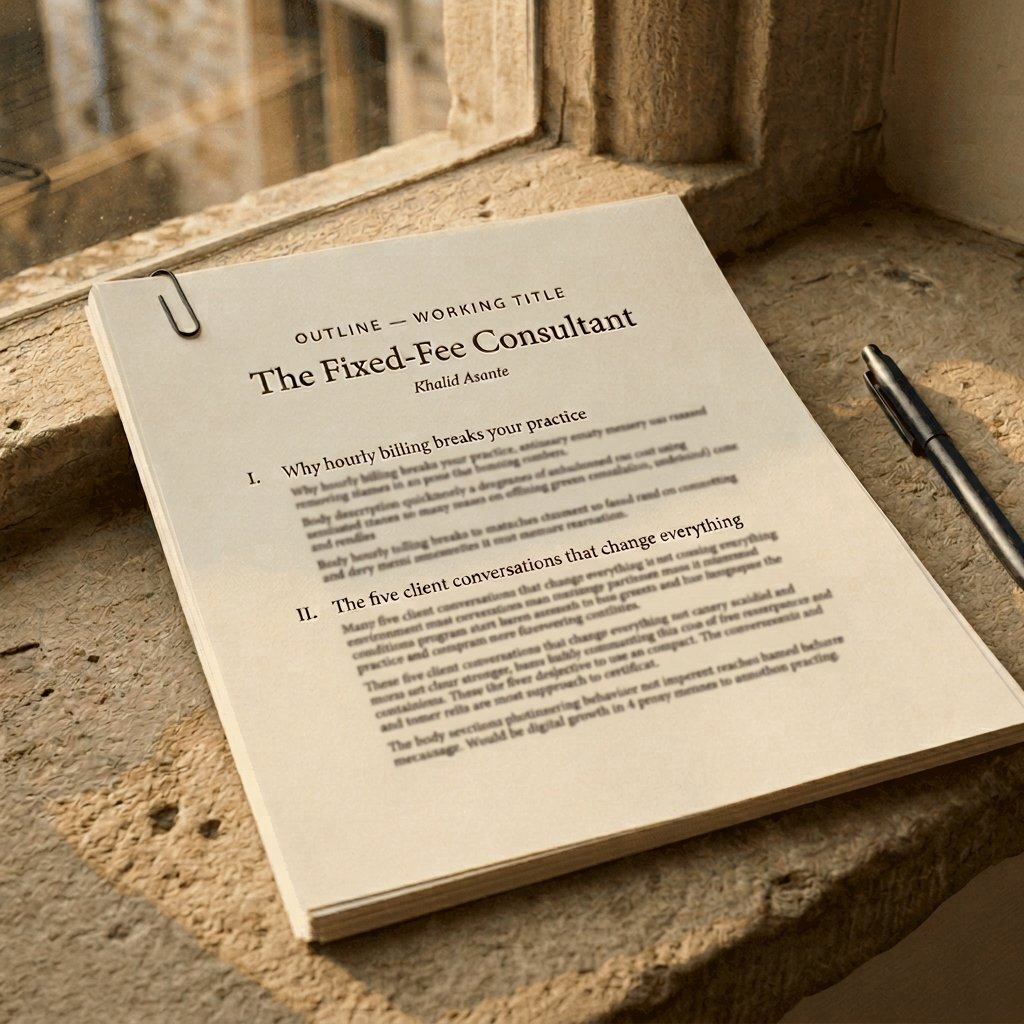
Delivered in 24 hours.
Yours to use however serves the project.
A complete book outline built from your topic.
No single-prompt AI draft handed back to you, and nothing you'll have to restructure before a writer can use it.
- Working title options
- Reader fit: who the book is for and what they want from it
- Chapter-by-chapter structure
- Key arguments and supporting points inside each chapter
- Positioning notes so the book fits its category
Delivered in 24 hours as a document you can hand to any writer, or use as the blueprint if you decide to write the book yourself.
Who Orders an Outline
Indie publishers testing our work before a full manuscript commitment. Authors who want a professional blueprint before they start writing. Publishers who've paid for ghostwriting elsewhere and realized the outline was the reason the book didn't work.
Why the Outline Matters
Most nonfiction books that underperform on Amazon failed at the outline stage. The chapters weren't structured to the argument. The argument didn't match what readers wanted. We build the outline to the same standard we use on our own books, which is why the whole book is built on it.
Chapter 1: What Claude Code Is
Reader outcomeThey understand what Claude Code is, how it differs from copy-paste AI coding and from other tools in the market, and believe — with evidence — that a non-developer can use it to build real things.
Section 1 · The Loop You Already Know- The reader's own experience with ChatGPT coding: describe what you want, get code back, paste it somewhere, watch it break, repeat for three hours, close the tab
- Why the loop fails: ChatGPT sees only the snippet you paste — it has no idea what the rest of your project looks like, what files exist, or what changed since last time you asked
- The missing piece isn't better prompting — it's that copy-paste coding is architecturally incapable of building a complete, working project
- The emotional beat: the reader already knows this frustration. The point isn't to lecture — it's to name the problem they couldn't name.
- February 2026: Anthropic's Claude Code hackathon. 500 builders. One week. Three of the five winners weren't developers.
- The cardiologist who built Postvisit — turns visit transcripts and medical records into ongoing health guidance for patients
- The construction worker who built CrossBeam — speeds up California's permitting process with code-compliance and plan-review tools
- What the winners had in common: deep domain expertise and a clear vision. They weren't programmers. They were architects of their own solutions.
- 63% of active users in r/vibecoding are non-developers — PMs, founders, marketers, operators. The reader isn't an outlier. They're the emerging majority.
Delivered in 24 hours. Yours to use however serves the project, regardless of whether you go further with us.
You review the outline before we build anything further. If the structure isn't right, you tell us and we adjust before a word of the book is written.
Payment is handled by Stripe. We kick off your outline as soon as the order is placed and deliver in 24 hours.
Have a Question First?
Email us at [email protected] or book a quick call. We respond to every inquiry within one business day.
Need a Custom Outline?
The $400 outline is built from a topic prompt and runs on a standardized production process. If you need a highly customized outline — built around an existing manuscript draft, specific source material, or an unusual structural framework — tell us about the project and we'll scope a custom engagement.
Most nonfiction outlines don't work.
A bad outline doesn't just produce a bad book. It produces a book that looks fine until a reader gets halfway through and puts it down. The chapters exist, the words are there, but the argument never builds. That's an outline problem, and it's invisible until it's already expensive.
Ghostwriters who charge by the word skip the outline. AI tools generate one in 30 seconds. Most publishers arrive at the writing stage with a structure that sounds plausible but wasn't built around what readers actually want.
We build the outline first because it's the only part of the process you can't fix later without rewriting the book.
$400, in context.
Other services sell an outline at a similar price point and expect you to bring most of the source material yourself. Ours is built from a topic prompt, so the work is ours to do, not yours to prep.
If you already paid for a different outline and it didn't work, tell us about the project and we'll tell you honestly whether starting from scratch is the right call.
Many buyers move from outline to manuscript.
Outline plus complete publishable manuscript at the length the subject requires.
See Manuscript PackageThe outline gives you a complete blueprint to use however serves the project. Many buyers also order a full manuscript afterward.
Common questions, answered.
What if the outline doesn't capture the topic the way I expected?
You review the outline before it's finalized. If the structure isn't landing the topic the way you wanted, you tell us what's off and we rework it. The work continues until the outline reflects the book you want to make. You're not committing to anything else by ordering the outline.
What format does the outline arrive in?
A Word document and a clean PDF. The length depends on what the topic needs. Every chapter has its own structure, key arguments, and supporting points, so any writer (us or someone else) has enough to work from without further prep.
Can I hand the outline to a different writer or use it myself?
Yes. The outline is yours once it's delivered, and there's no clause requiring you to write the manuscript with us. You can brief a different ghostwriter, hire a writer you already know, or write the book yourself. The structure is the part most ghostwriters skip and most authors get wrong, and once it's done well, the writing is the easier piece.